

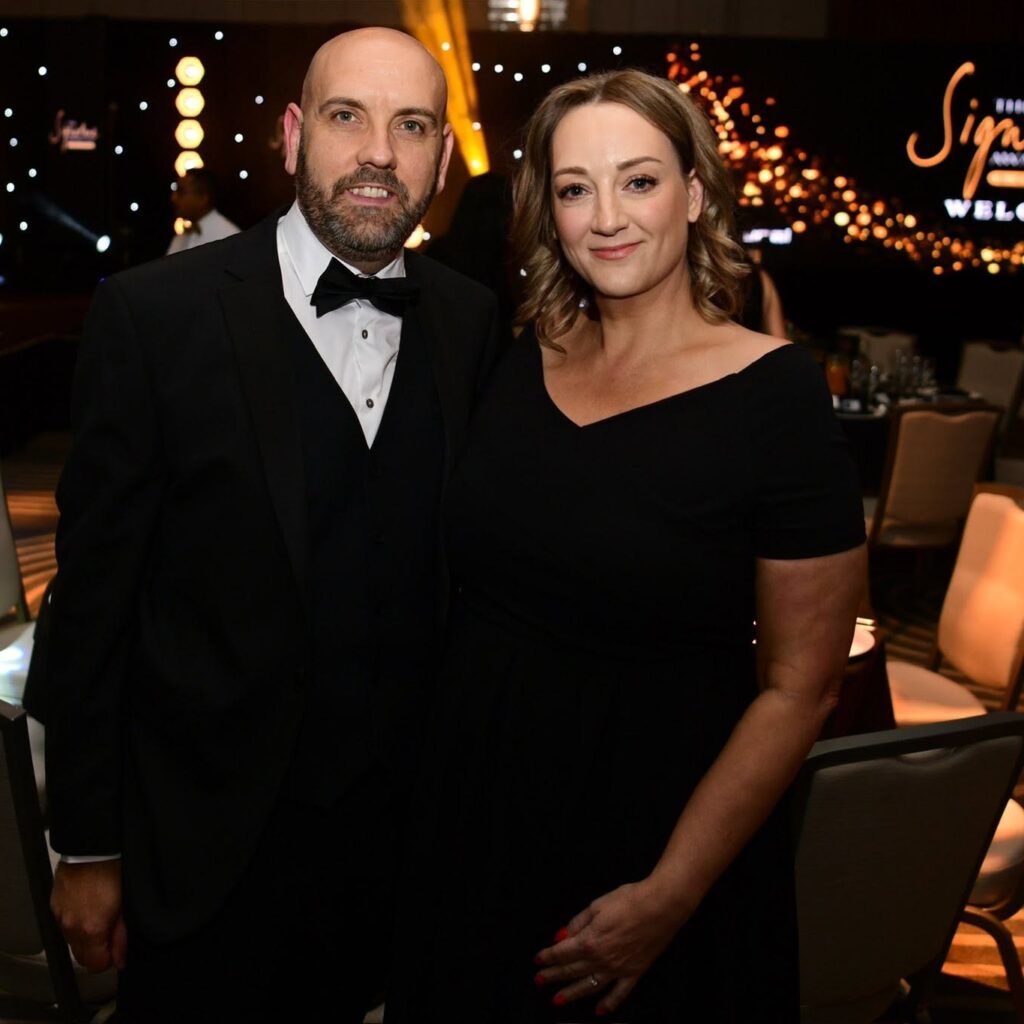
By Founder & Entrepreneur, Alison Goodwin
"I’m Not Sure We’re Measuring Success Particularly Well"
I have spent more than 25 years working with people in business, and these days I find myself increasingly fascinated by the things that don’t appear on somebody’s biography.
I meet people whose achievements, on paper, are extraordinary. People who have built and sold companies, raised hundreds of millions, created businesses across continents or accumulated the sort of wealth most of us struggle to comprehend. I also meet people at the beginning of that journey, when the ambition is enormous but the evidence of success is still mostly contained in a PowerPoint presentation and an alarming number of late nights.
What I’ve realised is that the numbers tell you surprisingly little about the person sitting opposite you.
In fact, the longer I spend around successful people, the less interested I am in the obvious signs of success.
I want to know whether you are interesting.
Whether you are interested in other people.
Whether you can laugh at yourself.
Whether your word means something when keeping it becomes inconvenient.
Whether you are still the same person when the waiter comes to the table as you were thirty seconds earlier when you were talking to the billionaire sitting beside you.
That last one, incidentally, tells you an enormous amount. Perhaps this is what happens as you get older, although I suspect 25 years in business has accelerated the process: you develop a fairly efficient filter for bullshit. And business contains plenty of it. We have become very good at presenting ourselves. LinkedIn can make almost anyone sound magnificent. Job titles have become increasingly elaborate, personal brands increasingly polished and success increasingly public. We announce the funding round, the acquisition, the new role, the award and the exit. What we rarely announce is whether we are actually decent to work with. Yet that is the information I increasingly want to know.

Reputation travels faster than you do
A large part of my working life involves introducing people, and I love doing it. There is a particular satisfaction in sitting with someone, hearing what they are trying to achieve and immediately knowing the person they should speak to.
Some of the most interesting things I have been involved with have started exactly like that. Not with a strategy, a pitch deck or a carefully engineered networking opportunity, but with a conversation that makes you think, Hang on. I know someone.
It sounds simple. It isn’t. Because an introduction is never just an exchange of contact details. Every time I introduce somebody, I put a small piece of my own reputation into the conversation. I am saying, implicitly, that I believe this person is worth knowing, that I trust them enough to bring them into somebody else’s world and that I don’t expect the recipient to regret answering the phone.
That has made me much more selective over the years. I would rather know 100 people who answer the phone than have 10,000 people in a database who vaguely remember meeting me at an event. And I would rather make no introduction at all than make one I don’t believe in. This is perhaps where I think we have got networking slightly wrong. We have confused access with relationships and contacts with connection. They are not the same thing.
Having somebody’s mobile number doesn’t mean you can call them. Being able to call them doesn’t mean they’ll answer. And having them answer doesn’t mean they’ll put their own reputation behind you. That last part has to be earned.
The really interesting stuff rarely happens when it is supposed to This is one of the unexpected things I have learned from building The Syndicate Global. We can spend months arranging an event. We think carefully about who is coming, where people sit, what we discuss and how we create an environment in which people will genuinely get to know one another. And then, quite often, the most valuable conversation of the entire day happens when none of us planned it. It happens because lunch has overrun, somebody has moved seats, a conversation has wandered gloriously off topic and one person says something that makes another person put down their glass and say, “You need to tell me more about that.”
I love those moments. They remind me that however sophisticated business becomes, however much technology changes the way we find people and however clever AI becomes at telling us who we should know, human beings remain wonderfully unpredictable.
Chemistry cannot be scheduled into a fifteen-minute networking slot.
Trust certainly can’t. And the best relationships I know were not formed because two people calculated their mutual commercial value before deciding whether to speak to each other. They began because they liked each other. Business came later. Character becomes much more visible when things become difficult. I have also learned far more about people when something has gone wrong than I ever have when everything is going beautifully.
Success is quite easy to wear when everybody is agreeing with you. Pressure is more revealing.
When money is involved, when expectations aren’t met, when somebody makes a mistake or when a situation becomes uncomfortable, you get to see what sits underneath the polished version. Some people become defensive. Some disappear. Some immediately look for somebody else to blame. And some simply say, “Right. This has gone wrong. How do we sort it?” Those are my people. Not because they never make mistakes (anyone who has spent any meaningful amount of time in business has made plenty) but because they take responsibility for what happens next.
I think we underestimate how valuable that quality is. Reliability isn’t particularly glamorous. Integrity is difficult to photograph. Being the person who quietly does exactly what they said they would do is unlikely to make you go viral. But I would back that person all day long. And perhaps I have become a little less patient with the rest
There was probably a time when I was more impressed by status. I’m not anymore. I have met people with extraordinary wealth who are extraordinarily generous, curious and kind. I have met others whose success enters the room several minutes before they do. I know which ones I want around my dinner table. And, increasingly, I think that is a reasonable test for business too. Would I want to spend three hours having dinner with you if there were absolutely no commercial opportunity attached? Would we still have something to talk about? Would you still be interested in the person beside you if you discovered they couldn’t advance your career, invest in your company or introduce you to somebody useful?
If the answer is no, I’m not convinced another zero on the balance sheet is going to make the evening any more interesting.
This is not an argument against ambition. I am enormously ambitious. I love big ideas, interesting businesses, extraordinary opportunities and people who have the courage (or occasional madness) to attempt something everyone else thinks is impossible. But ambition and humanity aren’t mutually exclusive. In fact, I think the people who manage to retain both are the ones I admire most. After all these years, perhaps my definition of a successful person has become remarkably uncomplicated.
Build something extraordinary if you can. Make money. Take risks. Be ambitious. Create a life that excites you. But be somebody people trust. Be somebody whose name is spoken well of when you are not in the room. And, for goodness’ sake, be interesting enough that we don’t have to spend the entire dinner talking about what you do for a living.
That, to me, sounds much more like success.
By Alison Goodwin, founder of The Syndicate Global.
The Syndicate Global connects ultra-high-net-worth individuals, family offices, and senior investors through a trusted private community. Membership is by application and recommendation only. jointhesyndicate.global