

The founders who outperform across a decade are the ones who protect time for the things that determine where the business is going, not just where it is right now.
A founder’s agenda can look like a list that never ends. From the P&L that needs attention, the hire that needs to close to the investor conversation that cannot wait or the product decision that has been deferred twice already.
However, we know this isn’t the whole agenda.
The founders who outperform across a decade are not the ones who manage the urgent list most efficiently, but they are the ones who protect time and attention for the things that determine where the business is going, not just where it is right now.
This is the agenda that tends to get crowded out. We’ve seen first-hand that the founders who make time for these ten things think differently, decide differently, and build differently from the ones who do not.
These are the ten essentials we think belong on every founder’s agenda in 2026.
1. A Clear Path to Profitability - Not Just Growth
91% of entrepreneurs surveyed by EY in their 2026 CEO Outlook say that disciplined growth and a clear path to profitability now matter more than rapid market expansion. The era of growth at any cost is over. In a more expensive capital environment, investors are rewarding resilience and operational discipline alongside ambition. If you cannot articulate what profitability looks like and when it arrives, that is the conversation to have before any other.
In our rooms, this is the question that separates the founders operating with genuine strategic clarity from those still running on momentum. The numbers need to tell a story that stands on its own.
2. An Honest Relationship With Your Capital Position
59% of entrepreneurs say access to growth capital is more constrained than 12 months ago. OECD research finds SME interest rates remain above pre-pandemic levels in 34 of 39 countries. Capital discipline is no longer a virtue, but rather a skill in survival. The founder who knows exactly what their runway looks like under three different scenarios is in a fundamentally different position to the one who has a rough idea.
This is also one of the most honest conversations we have in our gatherings. In a room where everyone has built something real, the pretence around capital position tends to fall away quickly. The founders who are clearest on this are also the ones who make better decisions faster.
3. An AI Strategy Tied to the P&L
80% of entrepreneurs plan to increase AI investment in 2026 – but only 9% link AI impact to financial reporting and regular senior management review. The gap between AI activity and measurable AI value is where most founders are currently sitting. The question is not whether to adopt AI. That conversation is over. The question is whether you can show where it is changing the P&L, not just the workflow. If you cannot answer that, the investment is not yet working.
We have had this conversation in our rooms more than any other in the last twelve months. The most useful framing we have heard: AI transformation is not about choosing the right tool. It is about fundamentally rethinking the operating model first.
4. A Talent Model That Scales
25% of entrepreneurs identify limited AI and data skills as the main talent constraint on their ability to create AI value, while 46% plan reskilling and upskilling as the primary response. The talent agenda and the AI agenda are the same conversation. The founders building the best teams right now are not just hiring for what the business needs today. They are redesigning roles for what it needs to become.
The other thing we observe in our community is that the founders attracting the best people are the ones whose mission and culture are unmistakably clear. In a market where AI is homogenising candidate profiles, the human dimension of the hiring process is more important than ever.
5. A Peer Group That Challenges You
This one does not appear in most research because it is hard to measure. But in the years of bringing the right founders and investors into the same rooms, it is one of the highest-returning investments a founder can make.
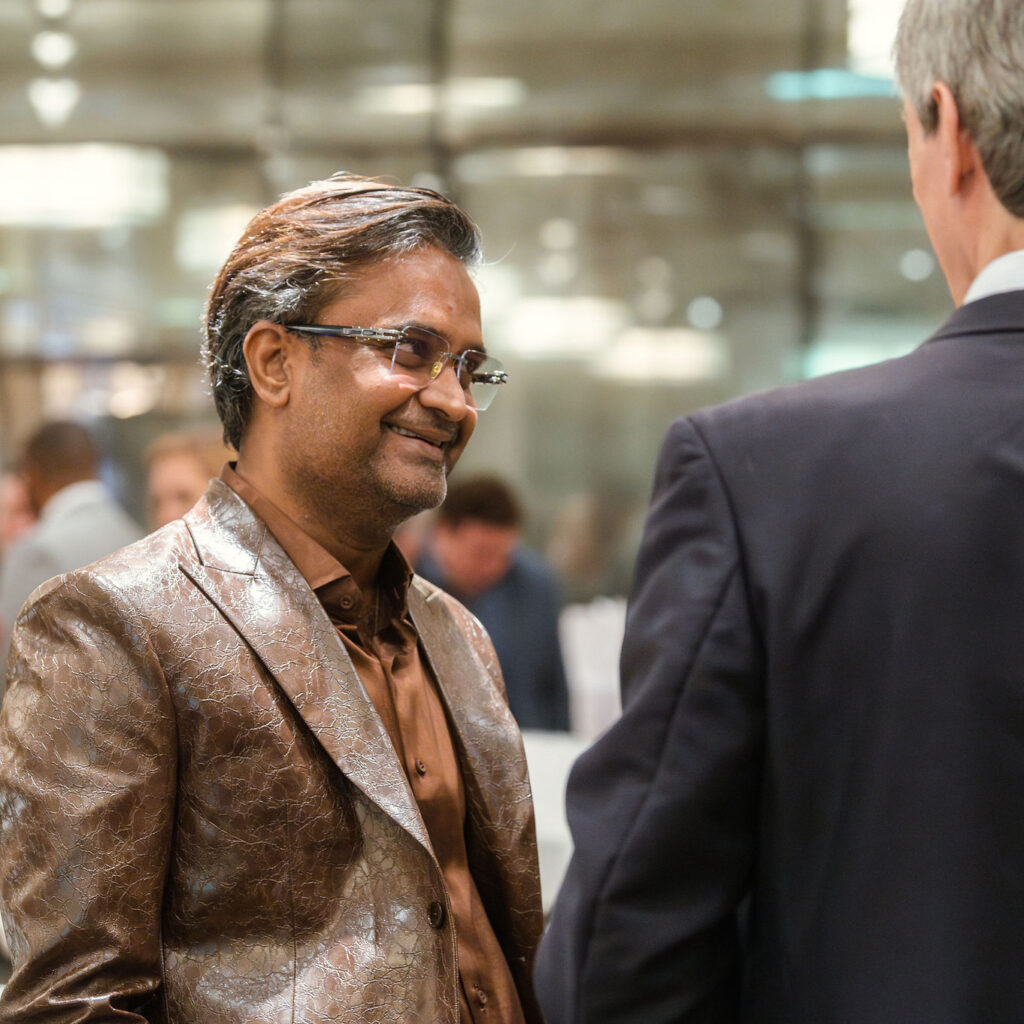
Not a network of people who will validate your decisions, but a room of people who will challenge them. The quality of the thinking you do is directly shaped by the quality of the people you think alongside. The founders who have access to genuine peer challenge, the kind that only happens in a room where trust runs deep enough to be honest, make better decisions. The data on high-performing leadership teams is consistent on this: the quality of the peer environment is a performance variable, not a soft benefit.
The most valuable conversations we have seen come from our rooms are not the ones about strategy or deals. They are the ones where a founder says something they have never said in a formal setting, and the room responds with something that changes how they see the problem.
6. A Partnership Strategy - Not Just a Sales Strategy
EY’s 2026 research finds that CEOs of mature companies are far more likely to pursue strategic alliances (57% vs 32% for entrepreneurs) and joint ventures (45% vs 26%). Yet entrepreneurial companies may be exactly what larger firms are looking to partner with. A well-structured alliance can close capability gaps in regulatory experience, AI governance, international distribution, and cyber maturity that would take years and significant capital to build independently.
Most founders underinvest here because of a legitimate concern about control. The answer is better deal design, not avoiding the conversation. Some of the most valuable introductions from our community have been exactly this: a founder who needed a specific capability meeting a corporate partner who needed exactly what the founder had built.
7. Clarity on What You Are Building and for Whom
Not the pitch deck version, but the honest version. Most founders can answer this for the business in its current form. Fewer can answer it for the business in five or ten years. And fewer still have thought carefully about who it is for when they are no longer the one running it.
Deloitte Private research finds that nearly 8 in 10 family business executives expect a CEO transition within the next decade. Yet only 57% have established a plan and fewer than a quarter are actively implementing one. The founders who navigate transition most effectively are the ones who started thinking about this long before they needed to. The legacy question does not wait until the exit conversation. It shapes the decisions being made right now.
8. A Succession Mindset - However Early It Feels
This is connected to the previous point but distinct from it. Succession planning is not about leaving. It is about building something that does not depend entirely on your presence to function at its best. The businesses that command the highest valuations and deliver the most durable returns are the ones where leadership capability has been built into the organisation, not concentrated at the top.
In our rooms, the founders who are most confident about the future of their businesses are almost always the ones who have thought carefully about this. Not because they want to exit, but because clarity about what happens without them makes them better at running it with them.
9. An Intentional Approach to Where You Spend Your Time
The formal agenda is not the whole agenda. Research from the Family Office Exchange finds that nearly 80% of UHNW individuals prefer connections introduced through mutual relationships, and warm referrals produce a 75% higher response rate in cross-border investment opportunities.
The most connected founders are not the ones with the largest contact lists. They are the ones who choose their environments deliberately. They are the ones who say no to the conference where they will be one of three hundred, and yes to the dinner where they will be one of twelve. They understand that the introduction made on a Sunday evening at the right table is worth more than anything that comes through a formal process on a Monday morning.
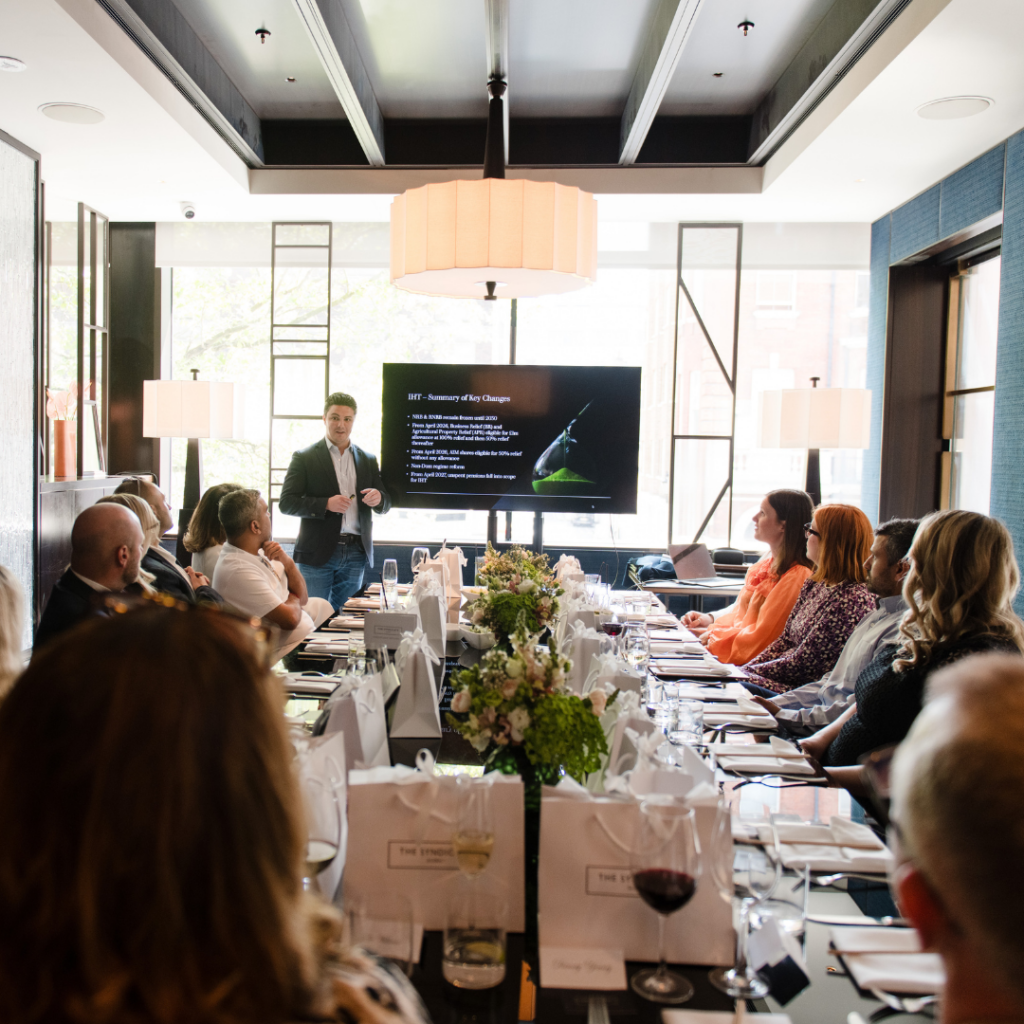
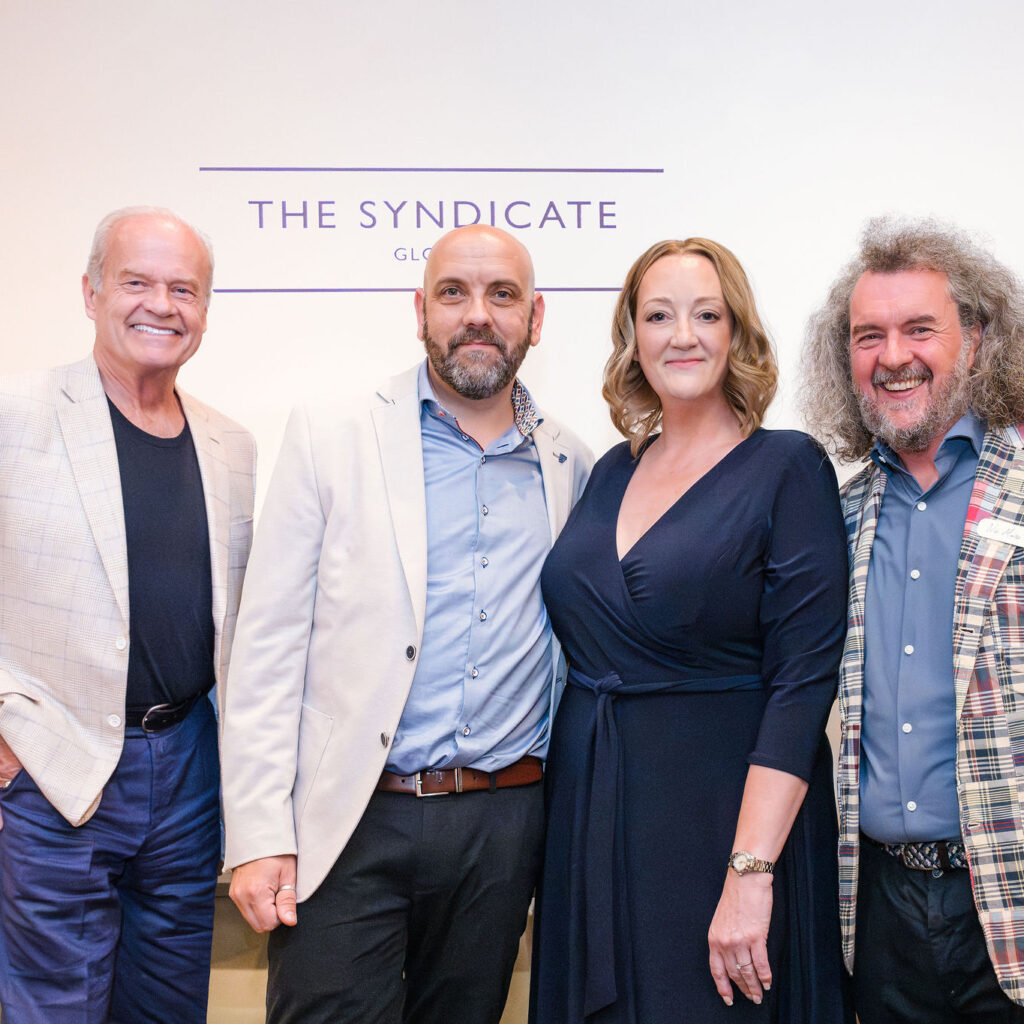
This is what The Syndicate Global is built around. We are not just networking. We are rooms where the right people can be genuinely honest with each other, in an environment designed to make that possible.
10. A Non-Negotiable Investment in Their Own Thinking
EY’s research on entrepreneurial resilience finds that the founders most likely to outperform are the ones who treat digital and AI investment as a priority for risk mitigation and who view existing regulations as guidance for strategy and innovation. In other words, the ones who are paying attention to what is changing and thinking carefully about what it means, not just responding to it.
The founder who is too busy to read, reflect, or have conversations that have no immediate ROI is the founder most at risk of making decisions inside a frame that has not been updated. The urgency of the day-to-day agenda will always be there. The question is whether it leaves enough room for the thinking that determines where the business is actually going.
In our experience, the founders who protect that room consistently outperform the ones who do not.
The agenda that gets crowded out is usually the one that matters most. Protecting time for it is not a luxury – it is the job.
Sources: EY CEO Outlook — Entrepreneurs 2026 | OECD — Financing SMEs and Entrepreneurs 2026 | Deloitte Private — Succession Paradox Survey 2026 | Family Office Exchange via CEOWORLD 2025
The Syndicate Global connects ultra-high-net-worth individuals, family offices, and senior investors through a trusted private community. Membership is by application and recommendation only. jointhesyndicate.global